A Killer Recipe

Disclaimer: There follows a recipe both life-enhancing and life threatening. This blog and its author are not responsible for any injuries sustained should you make this soup.
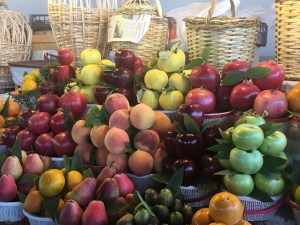
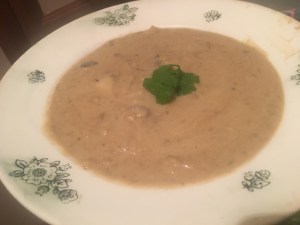
2017-11-04 10.39.07I got a bit over-excited at GUM bazar last week and so my haul home from Yerevan included jerusalem artichokes (sunchokes) and chestnuts, among other more mundane fall vegetables. I made a rather fancy soup for last night’s dinner–the so-called ‘family dinner’ we three Goris-based Peace Corps volunteers enjoy together every Wednesday.

fuxwellThe first job was to prepare the chestnuts. The recipe I used for reference was very specific: make an x-shaped cut on the rounded side of every shell. Apparently there is a special knife manufactured just for this purpose, but I don’t have one, and I don’t know anyone who does, either in Armenia, or in any other part of the world. So it was out with the Fuxwell (no wonder it advertises its intimate charms. It may have staying power in the boudoir, but in the kitchen it starts off keen (hah!) but quickly dulls. It is not the kind of knife a girl should marry…)  I did my best to inflict damage on the chestnuts as they skittered away from the knife, and thought I’d x-ed them all–until I put them in the hot oven. Within minutes, the stove was exploding, and terrifying gunshot filled the air. Aleta peered nervously around the kitchen door. With the almost-everyday news of gun-toting crazies in the United States, could she be blamed for fearing there was an American running rampant with a rifle on her own first floor? I opened the stove door to demonstrate what was causing the noise and we both ducked just in time as a piece of furred, leathery coating flew at us in fury.  I turned off the  oven, cleared up the shrapnel and salvaged what I could of the chestnuts. The Jerusalem Artichokes were much more cooperative. In the end, the soup was delicious, but I recommend you heat the bowls before serving. Here, on a chill autumn evening, it cooled down on the journey from pot to table. Really, it should be eaten piping hot.

Sunchoke and Chestnut Soup (makes about 6 large bowls)

You will need: 

7-10 knobbles of sunchoke/jerusalem artichoke

About 30 chestnuts

A large tub of sour cream/smetna

Two onions

Three fat cloves of garlic

Stock–vegetable, chicken  or beef

Olive oil, salt and pepper, cilantro or other herb

Bread for serving

A good knife

An oven and baking tray

A large saucepan

A stick blender–or blender

Soup bowls and spoons

What to do

Heat the oven to really quite hot

Put a couple of tablespoons of olive oil in a soup bowl and add a little salt and pepper and then roll the sunchokes in the oil. Place them on the baking tray and roast for 12-15 minutes, until soft.

Mark each chestnut with an X on the fat, curved side, being sure to pierce the skin. This is hard work, but don’t stint.  Your life could depend on it.

Put the chestnuts on the baking tray (the sunchokes can be cooling now) and in the oven. Stand well back.  After about 10 minutes, or as soon as the banging subsides, take the chestnuts from the oven. Chestnut meat should be peeping out of the X like hair from an old man’s ear. Peel the chestnuts while they are still warm.

Chop the onion finely and mince the garlic. Fry in a little olive oil until soft. Use a pot or pan that will be big enough to hold all of the soup. Roughly chop the sunchokes and chestnuts and add them to the mix. Add at least two pints of stock and give it 10 minutes to simmer.

Reduce the heat and add the smetna, stirring it into the mix. Allow the pot to cool, then whizz the mixture in a blender. It should have the consistency and color of thinnish porridge.

Pop next door and buy some warm, fresh-baked bread. (What? Not everyone has a bakery next door? Shame…)

Return the soup to the pot and heat thoroughly. Heat the serving bowls in the oven at the same time.

Pour the soup into the bowls. Add any little shards or crumbles of chestnut left over from the chopping process, and a leaf or two of a green herb.

Enjoy with friends. Eat with bread. Drink red wine. Follow up with an appley dessert and be glad it is fall.
2017-11-08 20.58.13

Posted in Advice, Armenia, Cooking, Food, friendship, Household tips, life lessons, Peace Corps, personal failings, Things that gladden the heart, travel | 5 Comments

A moment of silence

There is a Hanna-shaped hole in our cohort, the 25th to serve with Peace Corps in Armenia. Hanna Huntley died in a car crash a week ago, a profound loss for all of us here, and her friends all over the world. We sorrow for her, and for her family’s pain. Hanna had warmth, loyalty, ferocity, independence of spirit, fearlessness, goddamn cheek, humor, cynicism, cleverness, creativity and charm. Volunteers and locals, none of us who worked with her in Armenia will ever be quite the same again. I will write more about Hanna in future I know, because she made a profound impression on all of us who served with her.  Thank you Hanna.

Posted in Armenia | 1 Comment

School report

The CEO of Dasaran pulls up a slide that shows the number of logins they get from abroad—click throughs by the thousand from Russia, Spain and other parts of Europe and the Middle East. “These are dads working abroad” says Suren Aloyan. “Men who can’t live with their families, but who still care how their kids are doing in school”. Gulp.

There is very little that Dasaran doesn’t know about parents and children, teachers and schools in Armenia. The non-profit organization started as a resource for teachers in 2009— an efficient way of confidentially reporting grades, sharing assignment details, and updating parents on their children’s absences from school. (Attendance has risen sharply since this data was captured and shared—Teachers 1: Truants 0).

Now Dasaran (it means Classroom in Armenian) is in every school in the country. In addition to sharing information between schools, students and families, the organization also uses its data to inform education policy making— invaluable information to direct government spending. Further, it is reinventing education in Armenia through the development and dissemination of online educational games. Kids log in and learn. There is online real-time and self-paced tutoring and communities of practice for all kinds of study support. Dasaran also works beyond the classic curriculum, teaching a range of life skills to those who care to learn. Now every kid with an internet connection can learn from peers and first-rate coaches, regardless of whether he or she lives at the top of a mountain or the bottom of the deepest gorge. Dasaran is particularly proud of its work for children with disabilities—everyone can play.

Armenia has taken to the internet. There is 98% 3G coverage across the country. The many families without a computer will use a smart phone for the telecom bill is one that people here put on the top of the pile. In a country where travel internally and externally is difficult and expensive, the internet opens a route to the rest of the world.

You might think that a data-driven organization would be all Avatars and Artificial Intelligence— cold, remote and Big Brotherly. Nothing could be further from the truth. The team at Dasaran definitely care about hearts as much as minds.

My colleague and I got lost on the way to Dasaran yesterday. We called the CEO who sent a very gracious driver to retrieve us. We were met at the door by three young women who looked thrilled to have us there. Our names were on a welcome board by the door. The offices are filled with pictures of the children of Armenia, taken during the many events hosted at Dasaran HQ. There are photos of local, national and global dignitaries too of course: Dasaran wins awards, attention and funding from all over the world. The kitchen and stairway are lined with artwork from a recent national competition. I was particularly taken with a 3D collage of a ballerina in a wheelchair. Her powder blue tulle skirt fizzes out of the picture’s frame. Dasaran’s offices are clean, comfortable and beautifully styled. There is a serenity, optimism, energy and spirit about the place that is good for the soul. This country that cares so much about learning and qualifications has spawned an innovation in education and a workforce that is shaping Armenia’s rising generation. This is the future, and it works.

https://www.dasaran.am

Posted in Armenia, Dasaran, Data Analysis, Education, family, Internet, Learning, life lessons, Play, Technology, Things that gladden the heart, Things that make a difference, travel, Youth | 2 Comments

The children of Lor?

46 children attend school in the village of Lor in Syunik Marz, Armenia. There are twelve forms, 0-12, with a scant handful of children in each. 46 is fewer children than last year, and more than next year. Worldvision, a global charity, paid for the school to be refurbished in 2009. It is a beautiful building and very well kept: there are pot plants in every window, and art works on every wall. There is a computer lab, and a well-equipped science classroom. It is a shame that in a very few years, unless things radically change, this school, like the one in the next door village, will lie empty. Like most of the houses in Lor it will be locked and abandoned. No one will come there anymore.

Depopulation has long been a problem for Armenia. A century ago, as displaced Armenians made it here from what is now Turkish land, many others took flight to America, Spain, Lebanon, Syria, Iran and anywhere else that would have them. All were eager to build a better future. Most felt lucky just to have escaped with their lives. Other waves of emigration have followed: Azeri families hounded out of their homes in Armenia in retaliation for similar purges over the Azerbaijan border; economic refugees to Russia, Europe and the US–people desperately seeking work.

It is not that Lor is unlovely. On the contrary, it is in a beautiful location in the mountains and, on the day we were there a golden sun shone on corrugated cow sheds, apple trees, cabbage fields and the church, built in 1665.

There is a smart strain running through the people of Lor, no doubt about it. The village spawned the well-known mid-20th century poet Armenian poet Hamo Sahyan. The school in Lor had a girl selected for the American Councils for International Education’s prestigious FLEX exchange program a couple of years ago–beating stiff competition from all over the country. They have a boy lined up to compete for a place next year.  The village is a victim of its own success. Young people leave to go to university and are never seen again. From Konkush, the local docent at the museum, to the fifth grade girl I saw singing and reciting with great presence at the school’s Autumn show, these are people with education, intelligence, grace and presence. They deserve more opportunity.

Konkush and other women in Lori have black thumbs and forefingers at this time of year. Their hands are stained by iodine from the thousands of home-grown walnuts they crack. Invited to coffee at Konkush’s home, we were treated to honey still on the comb, apples from backyard trees, and plums so sweet the juice could pass for syrup. Discovering that Ara’s best friend in Goris is Konkush’s aunt’s brother (or similar), the family immediately produced a giant sack of potatoes, a bag or two of apples and a huge cabbage for us to take back with us as a surprise gift. There is not a lot in Lor–but what they have, they happily share. Like their most famous son, the people of Lor remain grateful for the beauty of their surroundings (see Hamo Sahyan poem below).

At school, the students sang, danced, recited, acted and told jokes while people from all over the village watched and applauded, sitting in the sun. There was a special rice and dried fruit dish, cooked in a pumpkin. There was harissa. There were pomegranates, nuts and baklava. Children had made masks and decorated for Halloween. Mums had baked bread. To spend such a day in Lor is a perfect pleasure. To spend a lifetime there is no longer possible. There is no usable road to and from the rest of the world. No-one wants to buy abandoned houses or rent untended gardens. The government has visited Lor to install meters so it earns money from the  water that people drink, cook with and wash in as it runs straight off the mountain, but I saw no other signs of government there. My fellow Peace Corps Volunteer has won a grant to build a small playground opposite the church, so children will no longer play on the asphalt forecourt in summer. The playground will be great–while there are still children. But without a road, an agricultural cooperative, and input from the Tourism Committee at the Ministry of the Economy what hope is there for the children, Konkush, the museum, and the families of Lor?

And What Has Nature Taught Me?
Hamo Sahyan

And What Has Nature Taught Me?
That oldness is eternally renewed,
that waterfalls insure insomnia,
and repetition brings sleep.
Nature has taught me patience,
and that conscience enslaves,
that canyons have scope,
that wounds heal themselves,
that black soil is fertile.
Nature has taught me patience,
and that the dog-rose is modest,
that giving is happiness,
that self-denial is courage,
not bragging can bring happiness.
Nature has taught me patience.

Posted in Armenia, Armenian art, Armenian writers, Beauty, Cross-cultural understanding, eating out, Education, Emigration, Environment, Food, friendship, gratitude, Great weekends, Halloween, identity, joy, love, National pride, Nature, Peace Corps, Poetry, resilience, Syunik Marz, Things that make a difference, travel, Village life, work, Youth | Leave a comment

The road to Lor

“Come” said Laura, my fellow Peace Corps Volunteer. “Come and see my school–no-one ever does”. I readily agreed—I had looked at a map of Syunik marz, and seen that Lor was only 52 km from my home town. Google Maps blithely reported that the journey would take one hour twenty minutes to complete.  They’d probably be right, if there was a proper road.

The road through the mountains after Vorotnaberd has not seen the tarmacadam truck since Soviet times. Extreme weather, limestone erosion and cloven foot traffic have all taken their toll and so the so-called road is steppes of shale, pitted with potholes the size of lunar craters. We zig-zagged warily and wearily passing cows grazing on our side of the hedgerow. The only cars we saw were those abandoned to rust. Apparently there is a bus to and from Sisian once a day–a journey of about 20 km each way. It can take two hours coming, and two hours going.

Ah, I hear you mentally deduce: this is a remote village in terminal decline and there is no earthly reason to go there. Why would the government spend money on a road to such a place?

Well, it just so happens that the village of Lor was the birthplace of the acclaimed Armenian writer Hamo Sahyan and now boasts a very handsome, newly constructed museum celebrating the poet’s life and work. It is a fabulous museum, but no-one can get to it without risking a burst tire, broken muffler and near-terminal  travel-sickness. The museum’s curator is Konkush, a local woman and passionate fan of the hometown poet. Sahyan’s son raised the money for the museum. Sadly, with the road as it is, Konkush may be presiding over a folly.

2017-10-27 10.36.07To get to Lor, it is necessary to pass through Darbas, a village nestled between layers of mountains as though fruit in a basket surrounded by napkins. In Darbas, as in Lor, most of the houses are boarded up and locked. Families have been forced to leave, because there is no work, and it is   just too hard to travel by the non-road to  Sisian–even if there was work to be found there. A local family made it big in Russia and decided to build a new church for Darbas–the fourth in the nearly empty hamlet. Again, it is a thing of beauty, but hard to believe it is an answer to the locals’ prayers. darbas church

The view from the moonscape highway over the village of Shamb is picture perfect–the sort of scene you see in Swiss postcards or Austrian travelogues. But this small town on a clear, cold lake is suffering because there is no way for tourists to travel there.

I am glad I went to Lor.  I’d like everyone to go. I am beginning to wish I was the kind of Irish American that was good at digging roads. That’s the kind of volunteer they could really use around here.

Posted in Armenia, Armenian writers, Beauty, Church, Cross-cultural understanding, Driving, errors of judgement, Peace Corps, Religion, Sisian, Syunik Marz, Things that make a difference, travel, Village life | Leave a comment

Seeing Armenia with Fresh Eyes: Part 3

You will not have heard of St. Gregory the Eliminator, because he doesn’t exist. This is a shame, because there are so many occasions when one needs a light-sabre-rattling Star Wars-style Saint, ready to avenge all wrongs. St. Gregory the Eliminator is what Richard heard when his Belfast-born guide to Armenia–me– spoke of St. Gregory the Illuminator, who is–or was–very real (227-331 AD).  It took some time to sort out the misunderstanding and we both ended up rather missing the Saint who never was. There are three things you need to know about the real St. Greg:

  • He founded the Apostolic church and brought Christianity to Armenia in 301 ADgregory main
  • He was imprisoned in a deep pit under Ararat plain, under what is now the church of Khor Virap. He spent at least 12 years in this dark hole. (A local supporter threw him scraps, and, presumably, the occasional amphor of water). St. G. was finally released when the King who had imprisoned him–Tiridates III–went mad. The madman monarch was persuaded that only St. G could restore his sanity.  The Saint was freed, the King was cured, and the story ended well all round.
  • Just about every church in Armenia has a mention of the Illuminator, although I am damned if I know if he shed light, or was just famous for coloring-in.

Richard’s bafflement didn’t begin and end with Gregory. Our cultural tour of Southern Armenia demanded that he learn to love the following characters, good eggs all.:

  • Nerses the Builder who was head of the Apostolic Church in the 7th Century. He
    Armenia October 2017 2017-10-16 10.01.03

    Khor Virap. Picture Credit: Valerie Burke-Ward

    built Khor Virap, the church at the site of Gregory’s imprisonment in Ararat marz.

  • Armenia October 2017 2017-10-16 13.28.11Momik the Architect who, in the 14th century, built Noravank (the new cathedral) in Vayots Dzor marz and also sculpted many of the stone crosses still found there.
  • Queen Shahandukht, of Syunik marz, an 11th century descendent of the Illuminator, who built the monastery complex at Vorotnavank


Armenia October 2017 2017-10-19 13.42.58

Vorotnavank

In a way, it was rather a relief to get to Karahunj, Armenia’s Stone Henge, because no-one knows who built it or how. Normally, the wind whips through the stony site,  but on the day we were there everything was still and clear.  The Armenian name Karahunj means Speaking Stones because of the whistling often heard when the wind blows through the perfect rounds bored at the top of the heavy rocks 7500 years ago. No-one knows how the holes were made, or why, for the Speaking Stones have kept their secret since prehistoric times. Archaeologists with rulers have squinted at the skies and speculated that the site was an astronomical observatory. Certainly, there are burial sites there, and what might be the remains of a settlement. There have been a couple of small excavations at Karhunj, but nothing major. One of these days someone will have the money to commission a project to discover as much as we can about one of earth’s last great mysteries. But for now, the Stones stand undisturbed. Unlike in Britain, there is not a busy main road or busloads of tourists visiting the ancient wonder. You can wander where you will.


Posted in Archaeology, Armenia, Armenian art, Beauty, Christianity, Church, Environment, Great weekends, Karahunj, Khor Virap, Norovank, Sisian, Syunik Marz, Vorotnavank | 3 Comments

Armenia through fresh eyes: Part Two

Armenia October 2017 2017-10-18 20.39.56A day out with Ara is bettered only by an evening at home with him and his family.  Thursday was his youngest son’s birthday–8 years old. There was a big party with 16 kids and a  cake in the shape of a chess board, complete with a white chocolate king. After all the kids had been ferried back to where they belonged, Ara picked us up and brought us to his home for phase two of the birthday bash. This was a unique opportunity for Valerie and Richard, visiting from the UK, to see how Armenians live, and to eat home-grown, home-cooked Armenian food.

Ara and Nelli don’t keep pigs themselves, but they know a man in Khondzeresk who does. A pig was duly purchased, skinned, butchered, marinaded and kebabed. Everything else on the table came from Ara’s garden–beets and green tomatoes pickled by Nelli, the last green beans of the season, and plates and plates of peppers and cucumbers with herbs, plus potatoes straight from the fire. We started with soup–greens and carrots, lentils, rice, potato and herbs in chicken broth that that came via a coop, not a cube. The women drank red wine, made with grapes from the garden, and the men drank mulberry vodka, which Ara makes by the gallon.

Toasts are a big part of any Armenian meal, and can cause problems for the unwary but  somehow we all survived the full set. We raised our glasses to the birthday boy of course, and then to his parents as tradition demands. Then each person round the table gave a toast (there were 5 of us, not including the kids) and we finished by celebrating all the parents of the world–the people who made us who we are today. Ashot and Hasmik. Melsik and Sona. Brian and Joan. Chris and Mary. Wilson and Greta.  Little wonder that Richard was then soundly beaten at chess by the eight-year old. Despite foregoing the firewater, I was also routed by the ten-year old. Sigh. Ara’s taxi stayed parked outside the house. We called someone else to take us home.

Posted in Armenia, chess, Cooking, Cross-cultural understanding, drinking, family, Food, friendship, Games, Moonshine, Mulberries, Social niceties, Syunik Marz, Things that gladden the heart, travel, Village life, Vodka | Leave a comment

Seeing Armenia with fresh eyes. Part one

It feels like I spent a week on the waltzers and in truth, I am still a bit giddy. Part of me blames Charles Masraff of Armenian Wine Importers Ltd who introduced me to Trinity 6100 Rose, a most delicious pale pink wine, made just outside Areni, a couple of hours north of where I live. Though calling to mind shells, rose petals and a pearly, early sunrise, this deceptively innocent wine is a scheming siren —once tasted the unwary drinker is forever hooked. Trinity 601-fueled, no wonder the last couple of weeks have been a blur–a rich mix of people, flavors, textures and sights that left my heart bursting, my feet blistering and my iphone buckling under the weight of so many new contacts, and so many must-have photos. The spur to all this excitement was the arrival of my first visitors from the outside world— Valerie and Richard came for seven days, all the way from the UK. It was just great to have them here.

Armenia October 2017 2017-10-19 13.26.09

The first delight was the discovery of the Bakery at 14 Vardanants Street in Yerevan, a cake-lovers’ cubby hole with hard-baked ornaments hung from the ceiling, and walls decorated by sweet nothings scrawled in marker pen by pastryphiles from all over the world. I represented Belfast (they already had a tart testimonial from Washington DC)  by eating a large slice of coffee cake on day one, peach cake on day two, and a croissant on day three. I can recommend them all. Cake was in order as the weekend marked the 2,799th birthday of Yerevan Armenia’s capital, edging us into existence before the founding of Rome.

Yerevan Balloons

Picture Credit: Clayton Davis

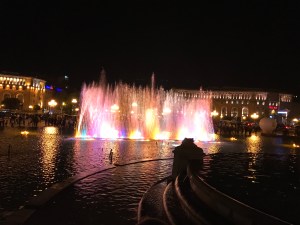
The occasion was marked by giant hot air balloons floating high, and smaller blow-ups fixed to every doorway, arch and railing. In the evening, there were fireworks and of course the fountains danced.


Armenia October 2017 2017-10-13 21.25.39 2


During the day, the Opera building was swarmed by city kids competing in chess, and martial arts contests, and proving that they could paint better than most of the street artists who typically exhibit their work.

Picture credits: Valerie Burke-Ward

The place was thronged by boys: out, about and engaged. Typically in Armenia, hobbies, exhibitions and all kinds of educational activities seem to attract only girls, but for Yerevan’s big birthday the boys were out in force. It was good to see.

Armenia October 2017 2017-10-14 15.05.50

Picture credit: Valerie Burke-Ward

Bellinis with fresh peach juice to toast the city, a few more pillars, monuments, arches and domes and it was time for dinner–a cheese plate and Thai appetizers at Wine Republic. (Thanks Valerie and Richard for making this Peace Corps Volunteer very happy). I would probably have lost all reason at this point were it not for the fact that V&R had hauled Wensleydale and cheddar, red curry paste and mango chutney in their checked bags all the way from Tesco in Taunton. I ate heartily at Wine Republic and hugged to myself the knowledge that I had more world-class cheese and spicy doings at home. Valerie’s fitbit recorded 17,000 steps. Let it be noted that my legs are much shorter than hers. I’m rounding my score up to 20,000, a personal best.

This slideshow requires JavaScript.

More walking on Sunday when two Irish, two English and two Armenians took the hill:  Kond is the Armenian for “long hill’ and the name for a series of steep, narrow streets close to the center of Yerevan. Houses here date from the 16th century (Yes, when Yerevan was a mere 2200 years old). Once the the redoubt of Persian Muslims, few tourists–and indeed few locals–trouble to go to Kond today. Most of the buildings are rickety even by Armenian standards, but here and there are signs of creeping gentrification. One coat of ice-cream coloured paint and the whole place could become an inland Positano or a Caucasian version of Hull’s Land of Green Ginger, the Shambles in York, or one of those Greek villages that feature in the movie Mamma Mia. 

Vagham from Gloria taxis picked us up punctually at 10 to take us to Jermuk. He’d brought some fresh walnuts and a flask of cognac for us all to share— Armenians are nothing if not hospitable. My beloved Ararat presented herself well— only a modest covering of cloud, which worked much like a crocheted, cobwebby wrap designed to show off a beautiful neck and shoulders. Two monasteries, a wine-tasting and miles of tortured tarmac later we hiccuped into Jermuk. The rain began to fall. We were expected 2017-10-23 11.00.26in a chilly classroom and found it warmed by the crackling energy of the women and girls who form Raising The Future, a social enterprise making and selling handicrafts. Channeling our inner Kate Middleton and Melania, Valerie and I worked hard to deserve the excitement our visit seemed to have generated. Lilit, in the role of translator,worked hard to find a gap in the women’s enthusiastic flow of answers and questions to tell us what was being said. The group have high ideals and big plans for the future of their collective, that much was clear. We invested in some dolls made of string and dressed in national costume. The felt mustaches are particularly effective I feel.

A quick walk round the man-made lake in Jermuk and a chance to take the waters at the mineral springs. Despite the beauty of the autumn trees and the expert carvings of distinguished looking Armenians I can’t yet identify, the highlight of the visit was the chance to snoop inside a derelict Soviet hotel. Weeds grow on window sills now and the property has been pillaged for wood and tile. Fixtures and fittings are long gone but a line-up of the burghers of Armenia remains. May the day come when this fine old building can be restored and turned into a dance hall or a chess school, a hi-tech production shop or indoor market. It’s a shame to waste it.

IMG_6728.jpg


Posted in Armenia, Armenian art, Armenian writers, art, Beauty, chess, craft activities, Cross-cultural understanding, drinking, eating out, Food, friendship, Fundraising, gratitude, Great weekends, History, Jermuk, joy, love, Mount Ararat, National pride, Nature, Peace Corps, Soviet Union, Things that gladden the heart, Things that make a difference, travel | 2 Comments

It is all of us, Stupid

You won’t want to read this post, just as I don’t want to write it. But it is five o’clock in the mo2014-10-24 11.29.05rning, and I have been awake most of the night. Now I am up, my shoulders are hunched, my neck is sore and my throat is tight. I feel sick and unless you are a sicko, you will too.

I am remembering them all, one after the other, the inadequate, bullying men.

The stranger who felt up me and my friend the night four of us were packed like sardines in sleeping bags on a floor in Kilkenny. Someone we didn’t even remember speaking to that evening who felt it was okay to rummage about under our clothes as we slept. As each of us woke up, molested, we just turned away and shrugged him off, pretending we were still asleep. We probably all had breakfast together the next morning. There was no screaming or yelling. We thought we’d done the wrong thing, sharing a house with people we’d just met: asking for trouble.

The man who poked my stomach and told me I was fat (I wasn’t) and should watch how I dress.

The driving instructor who tweaked my ponytail and put his hand on my knee every time I had a lesson. (I loathed him. It never occurred to me I needn’t go back).

The man nearly old enough to be my father, a teacher at another school, who drove me home on an icy night, stopped the car and lunged, knowing that if I got out of the car I couldn’t run, because the road was like a skating rink.

The married saddo in the Hillman (L)imp who used to watch us eat our lunch in the park when we were in the sixth form. We called the police the day he left his car and crept into the bushes to get a closer look. Our teacher (male) stopped the policeman questioning us about the incident. “He was enjoying it too much” said the teacher –a good man.

The time I was kerb-crawled on the Saintfield Road. The man in the car pulled up three times as I walked the mile home from where the red bus stopped. Eventually, he followed me into our park. Why didn’t I go to a neighbour’s house? Why didn’t I yell? Instead I ran home and spent the afternoon in fear he would find me.  I told my father what had happened when he came home from work. I remember the look of embarrassment on his face. “There’s no way you can be got at here” was all that he said “Sure aren’t you all right now?”

That’s right. No harm done. Or was there? All these incidents happened before I was 17 years old, before I had even left school. I will spare you everything since. 40 years later a measle rash of #metoo on Facebook has made me think of all this again, triggering memories that make me feel angry and sick. I can hardly believe I put up with it. I can hardly believe we all put up with it. It seems millions of girls and women put up with it still.

Usually, I link my blog posts to Facebook. Not this one. It is too private. You shouldn’t have to read it, and I shouldn’t have to write it. None of us should have to live it, then or now. Good night.

Posted in Metoo, sexism, sexual assault, social media, Women, Youth | 9 Comments

Peace Corpse Volunteerie: Hacks for Halloween

When presented with a broom I immediately resist any urge to sweep or clean. To me, brooms are strictly for riding. Is it any wonder Halloween is my favorite holiday? Here in Armenia it is the duty of every Peace Corpse Volunteerie (see what I did there?) to spend the month of October scaring the Bejasus out of every ghost-fearing Armenian (roughly 2.5 million at the last census). It is part of our job, for Goal Two of the Peace Corps mission is to help promote a better understanding of Americans on behalf of the peoples served. In an age when so much American activity defies explanation -and is truly scary– the wise PCV will confine herself to stories of Charlie Brown and the Pumpkin Patch, and to introducing Armenians young and old to all sorts of witchy wheezes and ghostly goings on. But what to do when there is no chainsaw to hand, and when pumpkins are small and in scant supply?

Here are my own October activities which I hope will inspire your Halloween celebrations in and out of Peace Corps.

3012515971_14a0d859fa_s[1]Pin the Wart on the Witch. You will need a piece of flip chart paper, a marker pen, a dish towel, a pair of opaque tights or similar to use as a blindfold, and a raisin squished on a thumb tack. Draw a large witch astride a broomstick on the paper and be sure to give her a large, black, hairy wart on her nose, using the marker pen. Find some children and blindfold the first of them. Birl the child three times until disorientated and hand over the raisin on the thumb tack.

Ask the child to pin the wart on the witch. Mark the pin prick with the child’s initials and move on to the next. The pin prick closest to the real wart wins the child a treat.

TP Tutenkhamen: buy several rolls of cheap toilet paper. Show the children a picture of an Egyptian mummy or a scary movie clip where mummies walk the earth. Put the kids in threes equipped with a roll of TP. Set a time limit. Challenge the teams to wrap one member as mummy. Then have a walking dead race with treats for the winning team.

Frightful Face masks. If you have environmental concerns about the waste of TP, use it to make face masks. You will need several balloons (blown up), flour and water paste,markers for decorating and some elastic bands, plus of course the toilet paper. Paste squares of TP over one side of the balloon until you have 3-5 layers. Leave to dry overnight. Use a knitting needle or similar both to pop the balloon and to put holes for the elastic about a third of the way down the side of the face mask. Thread the elastic band and tie a knot at each end to keep it in place. Have the kids use markers to draw scary faces on the masks– a light touch is needed. You may want to cut eyeholes in the masks to aid the claustrophobic. Wear the masks and run around howling and screaming.

Dead Man’s Guts. Prepare a bowl of spaghetti and leave to cool. Cut an orange in half at the equator (not pole to pole). Blindfold the children and keep the lights low. Tell the children a scary story about a school director who died a terrible death in the very room you are working in. Make sure to include the detail that her eyes were cut out and be sure to find the Armenian word for disemboweled. Then ask each child to come up to pay their respects to the body of the long dead Director. Guide each child’s hand to the cold spaghetti-the guts of the ghostly creature. Then to the orange half– the slimy eye socket of the spectre. Much screaming ensues.

img_1747What the Blank Blank Blank!!! If you must have something educational, create some frightening flash cards with suitably scary adjectives, nouns and verbs: slimy, scary, half-dead, headless, rat, frog, bat, witch, spider, ghost, corpse, mummy, eats, scares, kisses, follows, kills. Then ask the class to complete the sentence
The Blank Blank Blanks the Blank Blank

Irish Apple Pie. If you must involve autumn fruit in your Halloween celebrations and don’t want to bob for apples or eat them off strings dangling from a washing line, then assemble the ingredients for an apple pie and add a coin wrapped in foil or greaseproof paper, a curtain ring, a thimble and perhaps a bean, similarly wrapped.Bake these into the pie. Slice the pie and share among the children, warning them to look for the charms. The one who gets the coin will be rich. the one to gets the ring will be first married. The luckless recipient of the thimble will always work hard, and she who gets the bean will never go hungry. Happy Halloween.


Posted in Armenia, Cooking, craft activities, Cross-cultural understanding, Education, Environment, fear, Food, Games, Halloween, pagan ritual, Peace Corps, travel, Youth | 1 Comment